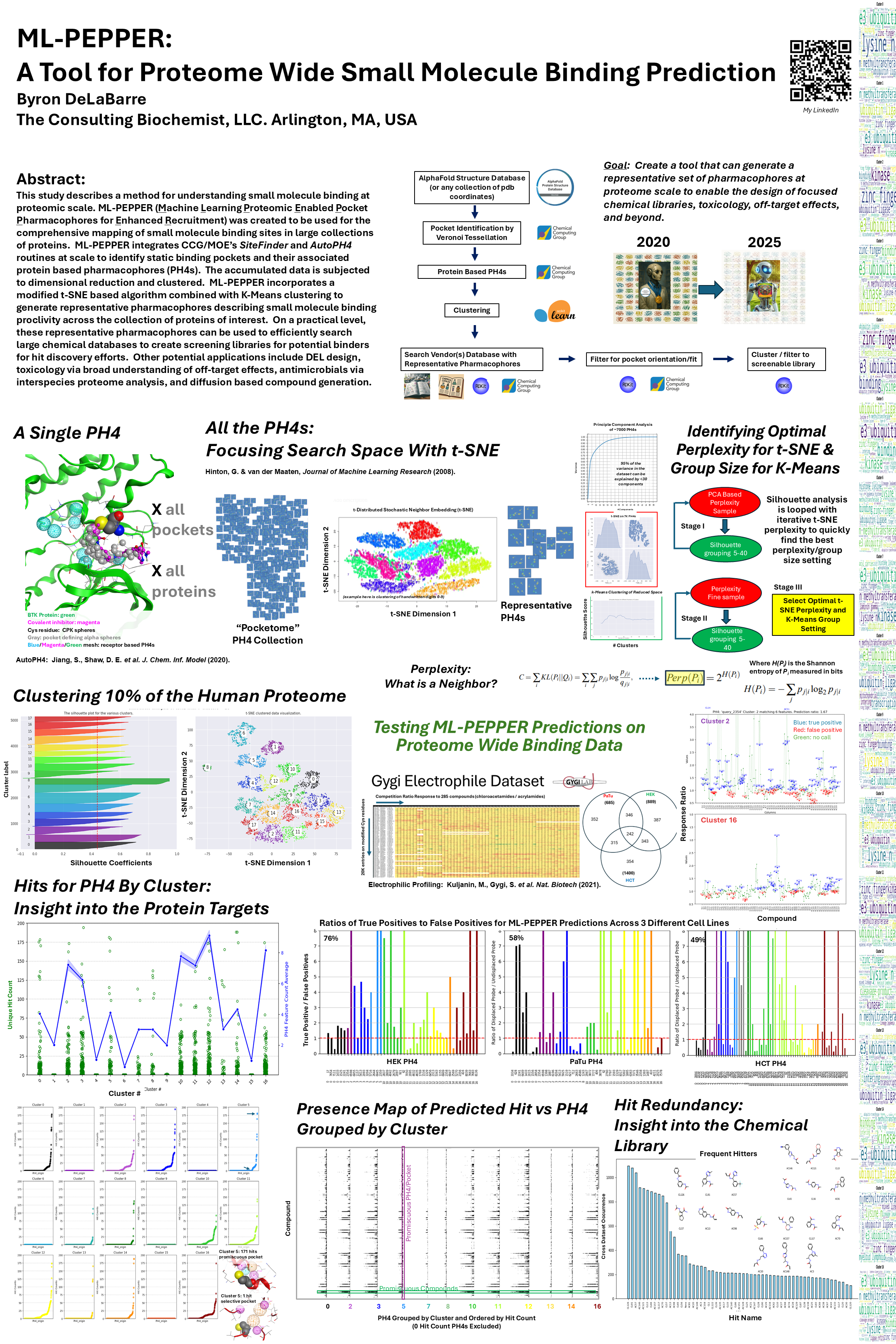
This study describes a method for understanding small molecule binding at proteomic scale. ML-PEPPER (Machine Learning Proteomic Enabled Pocket Pharmacophores for Enhanced Recruitment) was created to be used for the comprehensive mapping of small molecule binding sites in large collections of proteins. ML-PEPPER integrates CCG/MOE’s SiteFinder and AutoPH4 routines at scale to identify static binding pockets and their associated protein based pharmacophores (PH4s). The accumulated data is subjected to dimensional reduction and clustered. ML-PEPPER incorporates a modified t-SNE based algorithm combined with K-Means clustering to generate representative pharmacophores describing small molecule binding proclivity across the collection of proteins of interest. On a practical level, these representative pharmacophores can be used to efficiently search large chemical databases to create screening libraries for potential binders for hit discovery efforts. Other potential applications include DEL design, toxicology via broad understanding of off-target effects, antimicrobials via interspecies proteome analysis, and diffusion based compound generation.